Cycle Syncing 101: Nourish Your Flow with Superfoods
Your menstrual cycle isn’t just something you endure — it’s a powerful rhythm that tells you when to push, when to rest, and how to nourish yourself best. Cycle syncing is all about tuning into those shifts. In this post, we’ll get into what exactly is happening hormonally in each phase, how you might feel, what to consider doing (or not doing), and one superfood tip per phase to help you ride the wave with ease.
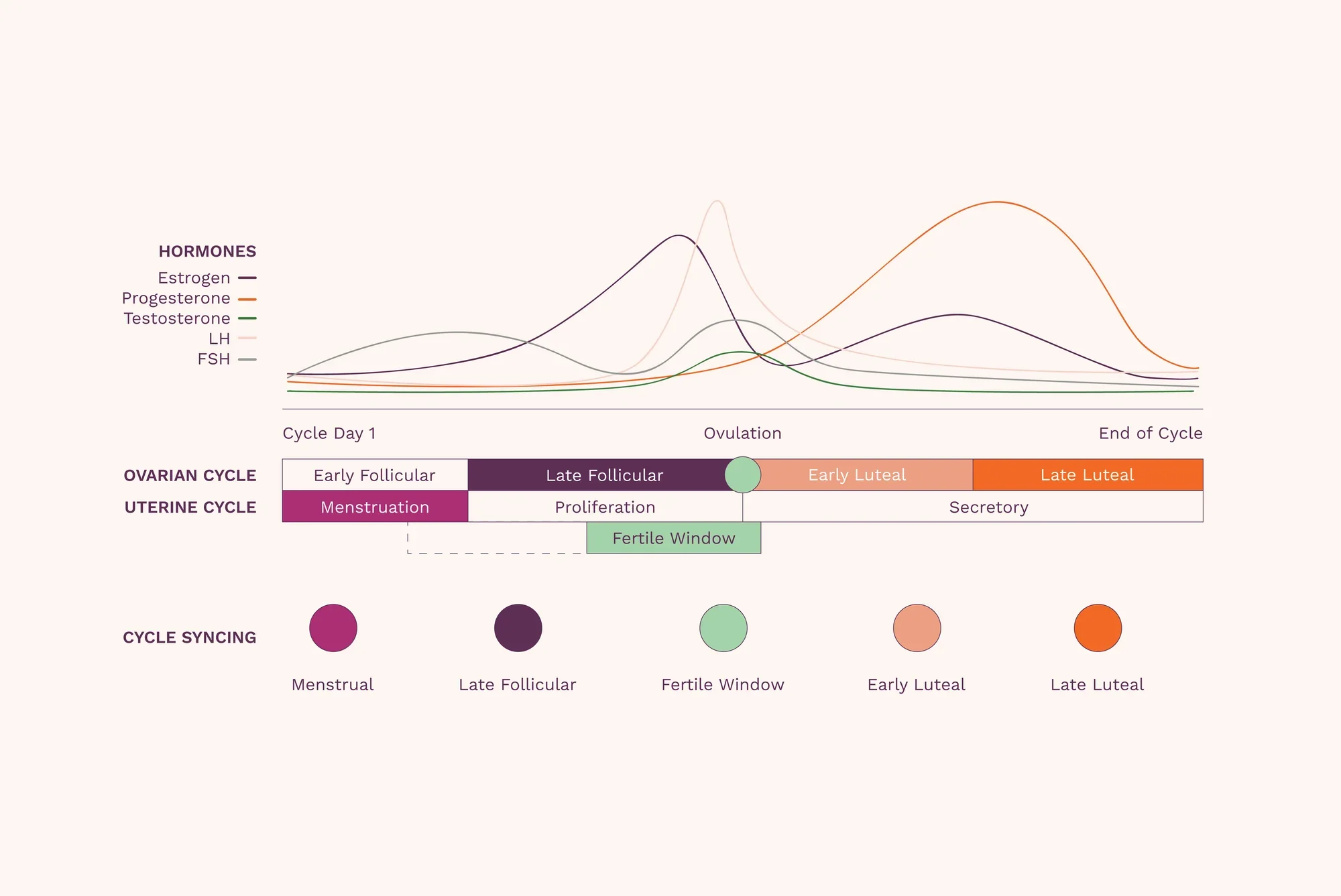
Phase 1: Menstrual Phase (Days ~1-5)
What’s happening: Your period starts. The uterine lining is shedding. Estrogen (the hormone that boosts energy, mood, and glow) and progesterone (the hormone that calms, grounds, and preps the body for possible pregnancy) are both at their lowest levels. It’s a reset time, physically and emotionally.
How you might feel: Tired, achy, more sensitive; less interested in big social stuff. Your energy is lower. It’s completely normal to want quiet, rest, and self-care.
What to do / What to avoid:
Do: Gentle movement (walks, stretching, restorative yoga), plenty of sleep, warm baths, nourishing soups.
Avoid: High-intensity training, pushing through fatigue, overcaf-fe-inated beverages, overcommitting socially or workwise.
Superfood Tip: Dark chocolate (85%+ cocoa)
It’s rich in magnesium (helps relax muscles, reduce cramps) and iron (you’re losing some during bleeding). A little square or two provides comfort, improves mood, and helps replenish what your body has used.
Phase 2: Follicular Phase (Days ~6-13)
What’s happening: Estrogen starts to climb. Follicles (tiny sacs in the ovaries) are growing, preparing to release an egg. Your uterine lining begins to thicken again.
How you might feel: Increasing energy, mental clarity, creativity, more drive to start new things. Likely feeling more sociable, ambitious, hopeful.
What to do / What to avoid:
Do: Start more active workouts (strength training, HIIT), brainstorming new projects, social catch-ups, trying new things. Eat fresh, vibrant foods.
Avoid: Overdoing it too soon (your body is still recovering), ignoring signals of fatigue.
Superfood Tip: Sprouted seeds (flax, pumpkin)
These are full of nutrients like zinc and vitamin E, which support skin health and estrogen activity, help with cell repair, and give you good fats. Mix into smoothies or sprinkle over yogurt or salads.
Phase 3: Ovulatory Phase (Days ~14-16)
What’s happening: Estrogen peaks. When it’s time for the egg to come out, your body makes a big burst of a special chemical called luteinizing hormone (LH). That burst is like a signal telling the ovary, “Okay, let the egg go!” — and that’s what causes ovulation). Progesterone is still low but will rise soon after.
How you might feel: Confident, talkative, magnetic. Your energy is high, you’re sharper, more social, may feel attractive or more outgoing. Physically, you might feel good, clear skin, more stamina, making you magnetic and communicative.
What to do / What to avoid:
Do: Take advantage with presentations, high-stakes work, social events, and performance-based workouts.
Avoid: Overeating sugary or inflammatory foods; pushing through pain or irregular signs (sometimes ovulation comes with twinges or discomfort for some).
Superfood Tip: Berries (blueberries, raspberries, strawberries)
Loaded with antioxidants — great for reducing oxidative stress, helping with estrogen clearance, keeping skin radiant, and offering a refreshing snack with fibre to support digestion.
Phase 4: Luteal Phase (Days ~17-28)
What’s happening: Progesterone (calms, grounds, preps for pregnancy) rises significantly after ovulation. Estrogen dips initially then sometimes has a small second bump, but progesterone is dominant. Your body is preparing for either sending a fertilized egg or restarting the cycle, but brings bloating and cravings.
How you might feel: More inward, more protective of your space, possibly more mood swings, bloating, fatigue, cravings; maybe more sensitive.
What to do / What to avoid:
Do: Focus on calming rituals, rest, warm nourishing meals, moderate exercise (yoga, walking, pilates), prioritize sleep.
Avoid: High stress, overly intense workouts, neglecting sleep, foods that spike sugar or inflammation (which can worsen PMS).
Superfood Tip: Sweet potatoes
They bring slow-digesting carbs, fibre, vitamin B6 (helps mood and serotonin), and potassium (helps reduce bloating). Also comforting, warming, which matches the mood of this phase. Roast them, mash them, add herbs/spices for flavor.
Cycle syncing is about tuning in, not strict rules. By aligning your nutrition with your hormonal shifts, you’ll feel more balanced and learn to work with your body, not against it.
Want to learn more? Book a free discovery call!